Moroccan Arabic Magic Against Bad Luck

This ritual performed by the Moroccan wizards aims to remove bad luck from the victim by transferring it to another person or animal, and this way to attract good luck towards you.

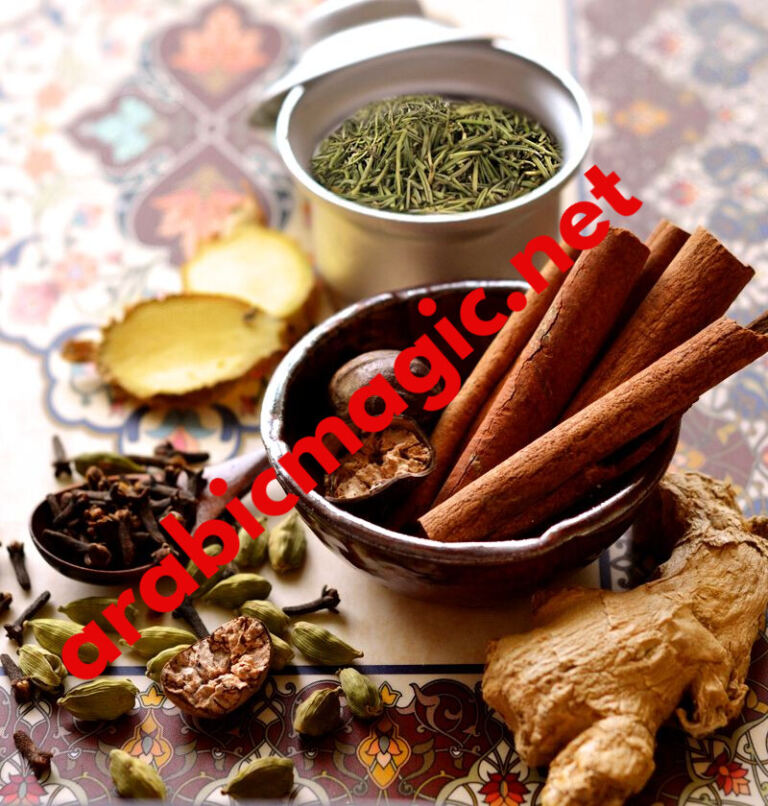
         Take a woolen cord to measure the length of the circumference from each finger of the hands of the affected by bad luck. Another cotton cord is tied around his waist and he should carry it for two days. At the end of the second day, the two threads are taken and rolled into a ball, that is placed in a small fabric, to which are added three old rusty nails, sage leaves, rosemary, thyme, kelp, anise seeds, sulfur, and a piece of Benzoe resin.

         The affected by bad luck person should then bring a clay pot with spring water and place it stand under the moon with the bundle with ingredients to stay overnight. In the morning, he has to take them back, and with a spoon should throw water behind his back and staring forward without looking back. Then the person should take one pebble from a city gate (or from a place where people pass), as well as a pebble from a river bed and a vessel with river water.

         Back in the home, the pebbles are placed in a metal container over fire, and separately part of the overnight water is mixed together with the river water and heated to the fire. When the water boils the pebbles are put into it and after it has cooled, the affected person should wash with the water and then to burn the bundle with ingredients. This is done outside the home, and when the person goes back home the first animal or person he mets will immediately receives the bad luck (it will be transfered to them).©

This article and all information published on this site are copyrighted. Any form of copying the texts or parts of them is prohibited. This site and all the information in it are protected by Digital Millennium Copyright Act. Any violation of this rights will be automatically detected and we will contact for assistance and legal action to your online provider and domain name registrar.

Don’t copy, be creative!

Related

  • Classifications & Types of Jinn, Ways of Summoning The Jinn, Al-Mandal, Dream Divination Techniques (Istikhara)

    Classifications & Types of Jinn, Ways of Summoning The Jinn, Al-Mandal, Dream Divination Techniques (Istikhara)

    A belief in magic and the jinn plays an important part in the Arab world. The Arabs believe in the existence of beings to whom they ascribe the generic name of jinn الجن which means “to hide, to conceal”. The grammatically correct masculine singular form in Arabic is jinni and the feminine equivalent jinniya [جنية/ جني, and jinn is the plural form. Islam accepts the existence of subtle, non-human entities as part of God’s creation. According to the Qurʾān, the jinn are invisible spirits that live among us and were created before men. It is commonly believed that these spirits live in tribes and nations, and belong to different religions, whether Muslim, Christian, Jewish, or infidels (unbelievers). The Jewish and idolatrous jinn are generally held to be the worst kinds, whilst the Muslim jinn are considered good and pious. The wicked shayāṭīn شياطين or devils are the servants of Iblis who launch harmful attacks against humans. The spirits are organised in tribes under chiefs and princes. Each jinni is dangerous because, like the Arabs, the power of his tribe is behind him and will avenge him if need be. The jinn are as innumerable as the sand, being of different types, different sexes, different religions, different races, and speaking different languages. They may communicate through a human host or one may hear them as disembodied voices. Sometimes one may glimpse them, as they can assume the shape of humans or animals in order to appear to us. Yet jinn are different from humans in nature, appearance, and power. According to the Quran, they are born of smokeless fire while human beings are created out of clay (Surah al-Rahman: 14–15), which makes physical contact between them impossible. Also, jinn are invisible...
  • Arabic Magic to Detect a Thief

    Arabic Magic to Detect a Thief

    To make a thief to reveal himself, take a metal square nail and write on one side of it in Arabic: “Ya. Sin. I swear by the Quran!” On the second: “Sad. I swear by the Quran!” On the third: “Kaf. I swear by the Quran!” And on the last: “Nun. I swear by the pen and what the angels write!” Gather the people suspected of theft, drive the nail into the ground, and start reciting Surah Al-Mulk, then order the people to leave. The one of them who is the thief will not be able to move from his place and you will be able to catch him.© This article and all information published on this site are copyrighted. Any form of copying the texts or parts of them is prohibited. This site and all the information in it are protected by Digital Millennium Copyright Act. Any violation of this rights will be automatically detected and we will contact for assistance and legal action to your online provider and domain name registrar. Don’t copy, be creative! Related: Moroccan Arabic Magic Against Bad Luck Arabic Magical Potion To Drive Away Misfortunes & Attract Good Luck Magical Arabic Talisman For Prestige, Respect & Fulfillment of Desires Arabic Tweez for Child Protection Ancient Arabic Magic & Oriental Occultism
  • Rue – An Herb For Attracting Good Luck & Prosperity

    Rue – An Herb For Attracting Good Luck & Prosperity

    Rue (Ruta graveolens) is one of the most well-known herbs in the folk medicine and magical tradition among the Balkan Muslims. Its use is multifaceted, mainly used to purify the home space and the human body from negative forces. Rue is a plant of Mediterranean origin, growing in places with a dry climate. Because of its specific smell, the herb is also used as an insect repellant, and traditionally at least one sprig is kept in the wardrobe next to the clothes. The rue was known for its protective qualities among the Greeks and Romans, being used to ward off evil forces and treat various health problems. The remnants of these ancient beliefs are preserved in folk medicine, where, for example, it is claimed that the herb successfully cures all heart diseases. Even Shakespeare himself gave the rue the unusual name “god’s mercy” because of the ritual practice of soaking a sprig of it in water and sprinkling it on possessed people. In some Mediterranean cultures, the plant is widely used in cooking because of its rich vitamin C content. Herb against diseases & evils: In addition to its many medicinal uses, the herb occupies a prominent place in folk beliefs and as a means of combating evil forces, mainly because of its smell, as well as the unusual appearance of its leaves, which resemble an outstretched human palm. This was reason enough for it to gain fame as a plant that protects against evil. Traditionally rue is cultivated in homes, near the front door, because of the belief that in this way it will protect the home and its inhabitants from evil eyes, magic and harmful spirits. Young children wear leaves of the herb or leaves are put under...
  • Arabic Magical Potion To Drive Away Misfortunes & Attract Good Luck

    Arabic Magical Potion To Drive Away Misfortunes & Attract Good Luck

    Mix 50 g of each of the following ingredients: This article and all information published on this site are copyrighted. Any form of copying the texts or parts of them is prohibited. This site and all the information in it are protected by Digital Millennium Copyright Act. Any violation of this rights will be automatically detected and we will contact for assistance and legal action to your online provider and domain name registrar. Don’t copy, be creative! Related: Moroccan Arabic Magic Against Bad Luck Rue – An Herb For Attracting Good Luck & Prosperity Magical Arabic Talisman For Prestige, Respect & Fulfillment of Desires
  • Karabasan – The Nocturnal Jinn That Causes Paralysis

    Karabasan – The Nocturnal Jinn That Causes Paralysis

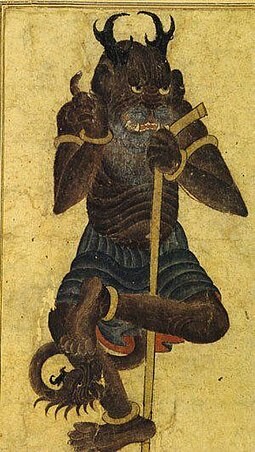
    “Suddenly I opened my eyes and felt an incredible weight press against my chest. I tried to move but to no avail. I couldn’t even draw a breath. And then I saw the creature sitting above me… I had never seen anything so ugly. I tried to scream, but no moan came out of my mouth. I began to pray in my mind to God and in a moment everything was gone.” If this experience sounds familiar to you, you are most likely one of the many who have experienced a similar phenomenon. Modern medicine defines it with the term sleep paralysis – an awake state of consciousness or sleep disturbance, which can be due to fatigue, experienced stress, irregular sleep, or the presence of psychological disorders. Undoubtedly, under the influence of such factors, one can face this phenomenon. Folk tradition and belief, however, give an entirely different explanation for its nature, associating it with an attack by demonic creatures. It is precisely this perception that I will address here, referring to the legends and numerous accounts of unexplained nocturnal visitors. In the folklore of different peoples, the spirits that attack sleeping people are called different names. In Russia – kikimora, In Croatia – moritsa, In Japan – kanashibari, and in England – The Old Witch. In Turkish and Middle Eastern folklore, they are defined as harmful jinn, mostly known as karabasan and kabus (nightmare), and in Egypt and Morocco called al-jathoom (night visitor) and boratat (the one who presses you). The most famous is the karabasan – literally black pressure, which is an evil spirit or jinn that hovers over a person while he sleeps, causing him nightmares, and feeding on his fears. It is believed that these creatures...
  • Ancient Arabic Magic & Oriental Occultism

    Ancient Arabic Magic & Oriental Occultism

    The Arabic magic is a mysterious occult science with a complex history. Coming from the exotic lands of the Orient and described in the tales of 1001 Nights, it remains shrouded in secrecy to present days. Although it is closely related to Islam and its mystical branches, its roots can be traced to the pagan beliefs of the ancient Mesopotamian civilizations. Subsequently developed and practiced by the Chaldeans, Sabean, and Nabataeans, who were called “stars worshipers” and were considered the wisest of their time. Pre-Islamic beliefs paid homage to many deities who were closely related to the seven celestial bodies. With the advent of Islam, some of these beliefs were lost or destroyed, and others were incorporated and absorbed by various early Islamic religious and spiritual cults. The great development of these occult teachings took place in the Middle Ages with the flourishing of Islamic culture, when remarkable and famous philosophers, scholars, and sages, including Al-Buni, Ibn Arabi, Al-Biruni, and Al-Ghazali, wrote and transcribed in Arabic numerous magical treatises and works with esoteric knowledge, astronomy, astrology, philosophy, and a number of other sciences for their students and the future generations. Some of them were translated into Latin, and a small part of these teachings passed into the Western occultism. From the whole blend of magical beliefs, spiritual and religious-philosophical teaching later is formed a complex system of rites and magical practices which in the Middle Eastern world is called with the generic term Rouhaniya that means Spirituality, and this term is used to denominate the Arabic magic. Among the initiates, it is also called Simiya or Ilm al-Hikma “Knowledge of Wisdom”. Those who practice these teachings are called mukarribun or “seekers of Divine closeness.” In the occult Western traditions, this...