Rue – An Herb for Attracting Good Luck and Prosperity

Rue (Ruta graveolens) is one of the most well-known herbs in the folk medicine and magical tradition among the Balkan Muslims. Its use is multifaceted, mainly used to purify the home space and the human body from negative forces. Rue is a plant of Mediterranean origin, growing in places with a dry climate. Because of its specific smell, the herb is also used as an insect repellant, and traditionally at least one sprig is kept in the wardrobe next to the clothes. The rue was known for its protective qualities among the Greeks and Romans, being used to ward off evil forces and treat various health problems. The remnants of these ancient beliefs are preserved in folk medicine, where, for example, it is claimed that the herb successfully cures all heart diseases. Even Shakespeare himself gave the rue the unusual name “god’s mercy” because of the ritual practice of soaking a sprig of it in water and sprinkling it on possessed people. In some Mediterranean cultures, the plant is widely used in cooking because of its rich vitamin C content.
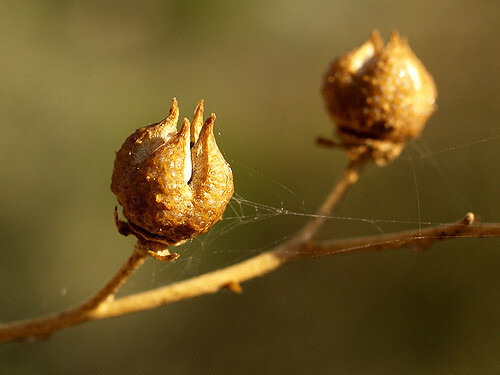
Arabic Magical Herb - Rue – An Herb for Attracting Good Luck and Prosperity

Herb against diseases and evils

In addition to its many medicinal uses, the herb occupies a prominent place in folk beliefs and as a means of combating evil forces, mainly because of its smell, as well as the unusual appearance of its leaves, which resemble an outstretched human palm. This was reason enough for it to gain fame as a plant that protects against evil. Traditionally rue is cultivated in homes, near the front door, because of the belief that in this way it will protect the home and its inhabitants from evil eyes, magic and harmful spirits. Young children wear leaves of the herb or leaves are put under their pillow to protect them from the evil eye.

Rue help maidens to attract love, but also married women, especially those whose husbands cheat. There is an old custom when a woman has an unfaithful husband to wash her underwear and spread it out to dry on a rue bush. Thus the woman will be loved again in the eyes of her husband.

Magical incense for banishing evil

Another unusual use of rue is that it can be used as magical incense. With a few dry leaves of the herb burnt the people affected by harmful influences, especially those attacked by spirits and black magic, can be cured. At least once a year the home is incensed with dry rue leaves to ward off evil forces that may have entered it, especially after visiting envious guests. ©

This article and all information published on this site are copyrighted. Any form of copying the texts or parts of them is prohibited. This site and all the information in it are protected by Digital Millennium Copyright Act. Any violation of this rights will be automatically detected and we will contact for assistance and legal action to your online provider and domain name registrar.

Don’t copy, be creative!
Related

  • Jinn – The Hidden Ones

    Jinn – The Hidden Ones

    The ancient peoples of the Middle East believed that long before man there was a race created by smokeless fire. Fourteen centuries ago, the Qur’an mentioned it in verses describing the presence of two sunrises and two sunsets: 14. He created humankind from sounding clay like pottery,15. and created jinn from a smokeless flame of fire.16. Which of your Lords wonders would you deny17. He is Lord of the two sunrises and Lord of the two sunsets. Surah Ar-Rahman The existence of two earths is repeated several times in the Qur’an – one inhabited by the descendants of Adam and Eve and the second by the children of Aba al-Jann, the firstborn jinn. The Arabic lore tells many stories related to the transportation of magicians over great distances for a blink of an eye, the achievement of invisibility, the attracting of innumerable riches, and the performance of amazing miracles. For many of these fabulous legends are responsible the jinn, who are one of the main characters in the folklore of the Muslims. These creatures are called with different names by the different cultures and religions, but this does not change their nature or the fact that much of the magic is based on interacting with them and providing their help. Not much is known about the exact origin of the jinn. Ancient legends speak of creatures made of primordial fire, inhabiting the earth together with mankind. They inhabit the world with their offspring, live in communities and tribes, have rulers and kings, create families, they also die, albeit with a much longer lifespan than humans. Jinn are conscious creatures with free will and with a clear moral position for good and evil, and some share our spiritual views and religions....
  • Harut and Maurut

    Harut and Maurut

    Harut and Marut are famous fallen angels in Islamic cosmology. They have taught people in Babylon about magic and have tested their faith. They are mentioned once in the Qur’an in the verse about the infidels following the teachings of the Devils (Shaitans). “Instead, they followed what the evil ones used to practice during Solomon’s reign. Not that Solomon himself was one who denied the truth; it was the evil ones who denied the truth. They taught people witchcraft and what was revealed in Babylon to the two angels Harut and Marut, although these two never taught it to anyone without first declaring, “We are nothing more than a temptation to evil: Do not deny [God’s] truth.” From these two, they learned what can separate a man from his wife, although they harm no one with it except with God’s permission. They learned what harmed them, not what benefited them, knowing full well that whoever acquired [this knowledge] would have no share in the Hereafter. Surely, evil is the [price] for which they sold their souls, if only they realized that.”Al-Bakara: 102The origin of these angels and the nature of their transgression remain unclear, which is why Muslim theologians are trying to explain them by referring to Talmudic, Iranian and even Greek legends. The Harut and Marut’s History in Islam As humanity was growing on the earth, its corruption forced the angels of heaven to complain to God who was too indulging in humans. However, God told them that if they were put in the place of man under the same conditions and surrounded by passions and pleasures, pushing people to commit sins the angels themselves would not have done differently and would succumb. Two of the noblest and most...
  • Classifications and Types of Jinn, Ways of Summoning the Jinn, Al-Mandal, Dream Divination Techniques (Istikhara)

    Classifications and Types of Jinn, Ways of Summoning the Jinn, Al-Mandal, Dream Divination Techniques (Istikhara)

    A belief in magic and the jinn plays an important part in the Arab world. The Arabs believe in the existence of beings to whom they ascribe the generic name of jinn الجن which means “to hide, to conceal”. The grammatically correct masculine singular form in Arabic is jinni and the feminine equivalent jinniya [جنية/ جني, and jinn is the plural form. Islam accepts the existence of subtle, non-human entities as part of God’s creation. According to the Qurʾān, the jinn are invisible spirits that live among us and were created before men. It is commonly believed that these spirits live in tribes and nations, and belong to different religions, whether Muslim, Christian, Jewish, or infidels (unbelievers). The Jewish and idolatrous jinn are generally held to be the worst kinds, whilst the Muslim jinn are considered good and pious. The wicked shayāṭīn شياطين or devils are the servants of Iblis who launch harmful attacks against humans. The spirits are organised in tribes under chiefs and princes. Each jinni is dangerous because, like the Arabs, the power of his tribe is behind him and will avenge him if need be. The jinn are as innumerable as the sand, being of different types, different sexes, different religions, different races, and speaking different languages. They may communicate through a human host or one may hear them as disembodied voices. Sometimes one may glimpse them, as they can assume the shape of humans or animals in order to appear to us. Yet jinn are different from humans in nature, appearance, and power. According to the Quran, they are born of smokeless fire while human beings are created out of clay (Surah al-Rahman: 14–15), which makes physical contact between them impossible. Also, jinn are invisible...
  • The Solomon Pact Amulet

    The Solomon Pact Amulet

    In this article, we will introduce you to a well-known Arabic amulet distributed in a large part of the Islamic world, the legend about it, and the properties attributed to it. The “Pact of Solomon” amulet is a scroll with an image in the form of a tower, in which are placed numerological squares, and around them the names of angels and the four Righteous Caliphs. The central part of this amulet contains the seven covenants of Solomon, from which it derives its name and about which the Arab mystic Al-Buni in his book The Sun of Great Knowledge asserts the following: “This amulet is remarkable and of proven power, containing the seven covenants taken by Solomon. He who wears it will be protected by its baraka (life force) from all trouble by land or sea while traveling or standing still. It also contains sacred symbols of protection useful for banishing diseases and weaknesses. The seven saving signs help to ward off accidents and the evil intentions of enemies or other people, for victory over envious people, against the oppression of an unjust person and from the harm of slanderers. The blessed key symbols ease difficulties, ease birth, help trade and increase sales, attract a groom for the unattractive, help in pregnancy, victory, reconciliation, compassion, love and continuity, heal wounds, and other significant benefits through the help of God the Most High.” This is the legend of how Solomon took the covenants: The wise king, after hearing this, grabbed her tightly and said to her: – O Cursed One, you will not escape from my hands until you agree with me on terms in favor of the sons of Adam and the daughters of Eve. And she said: – O...
  • Arabic Planetary Talismans

    Arabic Planetary Talismans

    In the Arabic magical tradition, there are various talismans associated with the main seven heavenly bodies. Presented here are some of the most popular, for the manufacture of which it is necessary to be engraved on stone or metal corresponding to the given planet, and made in auspicious astrological time. Arabic Talisman of Jupiter Jupiter is the planet of luck, finances and expansion. It is associated with stability and growth. The talisman helps its owner to attract luck and prosperity in a personal aspect or work. It also helps to avoid bankruptcy. If placed in the workplace or shop it helps to attract customers and visitors. It protects the home from negative forces and promotes a good atmosphere in it. Properties:Protects against dangers on landGives success in gambling and bettingImproves financial conditionAssists with business and court casesEndows its owner with ambition, honesty, and virtueIncreases mental energyIt helps to attract good luck overall Arabic Talisman of Moon The Moon is that celestial body that exerts the greatest influence on all forms of life and is identified with the feminine. Its talisman is related to intuition and protects its owner from aggression and physical dangers. Also for protection from evil forces and their elimination. Properties: · Against nightmares and for peaceful sleep· Drives away negative forces and spirits· To strengthen intuition and gives insight into sleep· Protection from dangers on the water· Alleviation of physical pain· To attract harmony· To protect the health· Accelerates recovery processes after illnesses Arabic Talisman of Mercury Mercury is associated with mental activity and travel. Its talisman strengthens memory and the ability to memorize quickly, and bestows success in studies and everything related to science. The talisman is especially suitable for students or those who earn their...
  • Ancient Arabic Magic and Oriental Occultism

    Ancient Arabic Magic and Oriental Occultism

    The Arabic magic is a mysterious occult science with a complex history. Coming from the exotic lands of the Orient and described in the tales of 1001 Nights, it remains shrouded in secrecy to present days. Although it is closely related to Islam and its mystical branches, its roots can be traced to the pagan beliefs of the ancient Mesopotamian civilizations. Subsequently developed and practiced by the Chaldeans, Sabean, and Nabataeans, who were called “stars worshipers” and were considered the wisest of their time. Pre-Islamic beliefs paid homage to many deities who were closely related to the seven celestial bodies. With the advent of Islam, some of these beliefs were lost or destroyed, and others were incorporated and absorbed by various early Islamic religious and spiritual cults. The great development of these occult teachings took place in the Middle Ages with the flourishing of Islamic culture, when remarkable and famous philosophers, scholars, and sages, including Al-Buni, Ibn Arabi, Al-Biruni, and Al-Ghazali, wrote and transcribed in Arabic numerous magical treatises and works with esoteric knowledge, astronomy, astrology, philosophy, and a number of other sciences for their students and the future generations. Some of them were translated into Latin, and a small part of these teachings passed into the Western occultism. From the whole blend of magical beliefs, spiritual and religious-philosophical teaching later is formed a complex system of rites and magical practices which in the Middle Eastern world is called with the generic term Rouhaniya that means Spirituality, and this term is used to denominate the Arabic magic. Among the initiates, it is also called Simiya or Ilm al-Hikma “Knowledge of Wisdom”. Those who practice these teachings are called mukarribun or “seekers of Divine closeness.” In the occult Western traditions, this...