Classifications & Types of Jinn, Ways of Summoning The Jinn, Al-Mandal, Dream Divination Techniques (Istikhara)
A belief in magic and the jinn plays an important part in the Arab world. The Arabs believe in the existence of beings to whom they ascribe the generic name of jinn الجن which means “to hide, to conceal”. The grammatically correct masculine singular form in Arabic is jinni and the feminine equivalent jinniya [جنية/ جني, and jinn is the plural form.
Islam accepts the existence of subtle, non-human entities as part of God’s creation. According to the Qurʾān, the jinn are invisible spirits that live among us and were created before men.
It is commonly believed that these spirits live in tribes and nations, and belong to different religions, whether Muslim, Christian, Jewish, or infidels (unbelievers). The Jewish and idolatrous jinn are generally held to be the worst kinds, whilst the Muslim jinn are considered good and pious.
The wicked shayāṭīn شياطين or devils are the servants of Iblis who launch harmful attacks against humans. The spirits are organised in tribes under chiefs and princes. Each jinni is dangerous because, like the Arabs, the power of his tribe is behind him and will avenge him if need be.
The jinn are as innumerable as the sand, being of different types, different sexes, different religions, different races, and speaking different languages. They may communicate through a human host or one may hear them as disembodied voices. Sometimes one may glimpse them, as they can assume the shape of humans or animals in order to appear to us. Yet jinn are different from humans in nature, appearance, and power. According to the Quran, they are born of smokeless fire while human beings are created out of clay (Surah al-Rahman: 14–15), which makes physical contact between them impossible. Also, jinn are invisible beings: they can see humans whilst they cannot be seen. Moreover, jinn are capable of performing miracles: the Qurʾan mentions their ability to traverse time and space at incredible speeds and to transport unbelievable weights (Surah al-Naml: 39).
Because of their numerous powers, the jinn account for much of the magic perceived by humans, often cooperating with magicians to accomplish their feats. There is a fundamental belief in al ghayb الغيب, the unseen and the unknown, in the Islamic faith. Sorcery or sihr سحر is viewed as an attempt to control the forces of nature, either for good or evil purposes. As such, it is forbidden according to orthodox Islam, unless it is done with God’s explicit permission, as in the case of miracles performed by those favored by Him.
Magic and sorcery have been practiced widely in Arab culture. An individual practicing sorcery is called sahir ساحر ,(plural saḥarah سحرة). Sihr is traditionally distinguished as being either natural/sympathetic or demonic. Natural magic makes use of the hidden properties (khawas خواص (of natural substances, whilst demonic magic involves the help of spirits and jinn, usually malevolent demons (shayatin).
Although the jinn often visit mankind of their own free will, there are also many ways by which sorcerers can summon them. These methods, if used clumsily, may expose them to temptation and peril.
The practice of jinn exorcism, or jinn eviction, is called sir or sara. The term saraʾa is used by Middle-Eastern healers and magicians for the healing process, or exorcising the jinni through struggle and submission. Some healers work through a jinni khabir (informant), who instructs the healer as to how they should treat the patient, by reading their future and so on, or revealing to them the location of a hidden spell (sihr), which has to beextracted or undone.
Classifications & Types of Jinn
There exists a rich language to describe the jinn, with terminology for the different types of jinn: hinn is said to denote one tribe of weaker jinn, or those spirits intermediate between jinn and men; ghul غول comes from the root ghala غل ,(meaning to seize; ʿafarit عفاريت) [singular: ifrit عفريت] are usually malevolent – the verb ʿafara عفر , from which the noun is derived, means to roll in the dust, (i.e. to bring down), and so the name is used of powerful spirits; marid مارد is derived from marada مرد , [to be rebellious] – these jinn are said to be the most powerful and are very arrogant; silat usually denotes a female spirit; the shiqq has the form of a bisected man (as if divided longitudinally), and often attacks lonely travelers; ʿamir is any jinni that lives in a house or near people; and rohani is a jinni who is said to live in the air between the earth and the sky.
Furthermore, they are often alluded to by such expressions as al-aryah (the winds/airs); al-jawad (the bountiful/generous); sukkan al-ʿammar (resident jinn); as sidna ‘our lord; and rjal al-hafiya, ‘the hidden men.’ Jinn are ranked by their magical strength and standing within their own
society, with greater jinn being highly intelligent and extremely dangerous while lesser ones are more akin to mischief-makers. The social organisation of the jinn community resembles that of a royal court, in which most of the jinn are offspring of the seven jinn kings, categorised as archdemons and leaders of the infernal hosts. These rulers are traditionally associated with
the seven planets, with a colour and a day of the week attributed to each of them. They have many subjects and advisors, drawn from the tribes under their rulership. The old Arabic grimoires refer to them as the seven terrestrial kings (muluk al-ardiya). They are governed in turn by the seven angels of the days.
In addition, Arabic occult lore gives a number of different leaders, kings and queens of the jinn, for example King Taresh is the ruler of the ʿummar al-buyut (dwellers in houses), all jinn who reside with humans.
The qarin is another important type of jinni. Qarin (pl. quranaʾ) or hamzad means ‘constant companion,’ and is derived from the root q-r-n, meaning to join, to couple, or to yoke. It is believed that for each person in the human realm there exists a qarin in the parallel jinn realm. Quranaʾ may be female or male: qarin قرين or qarīna قرينة. Usually, a qarin resides in a male and a qarina in a female. Abba Deebaj is the king of all quranaʾ. It is the qarin who knows the character and deeds of the dead. During seances, a jinni can pretend to contact the dead allowing them to speak to the living, when in fact the jinnī has contacted the qarin of the dead person. The qarin, as the constant companion of the dead person knows his entire life history, can mimic his voice and accurately answer any questions, thus fooling those present.
Iblis or Shaytan is the Islamic equivalent of the Devil. He is the ruler of all underworld and malevolent jinn or shayatin. Iblis is viewed as a demonic figure, or fallen jinni, whose primary task is to incite humans to commit evil through deception. Shayṭān and his minions are ‘whisperers,’ in that they whisper into the hearts of both humans and jinn, urging them to sin. Iblis most likely is a contraction of the Greek diabolos, although the Arab philologists derive the name from the root b-l-s, ‘because Iblīs has nothing to expect (ublisa) from the mercy of God.
He is also known as ʿaduww Allah (the enemy of God) and al-ʿAduww (the Enemy). According to a hadith narrated by Ibn ʿAbbas, Iblis revealed that his name had been ʿAzazil, and according to another account that it had been Al-Harith.
Ways of Summoning The Jinn
Arabic magic assimilated many magical procedures from different cultures such as those of Mesopotamia, Greece, Egypt, Chaldea and India. Sorcery by the means of jinn plays a significant role in the Middle-Eastern magical tradition. Most Islamic occult manuals contain a variety of spells for summoning jinn, whether for acquiring hidden knowledge, for accomplishing
various deeds, or employing them in the search for treasure. These are commonly viewed as illicit forms of magic because they are addressed not solely to God, but to jinn and demons. Many of the methods and techniques covered in the old Arabic manuscripts and grimoires are unknown to Western readers. This book is primarily intended for this audience, presenting a complete translation of jinn summoning techniques selected from multiple magical treatises that will bridge the gap between the Western and Islamic occult sciences. My wish is to facilitate the exchange of esoteric ideas between the two worlds and to inspire further research on the subject. But first, some introductory remarks are needed concerning the different methods of conjuring jinn among the Arab magicians.
Al-Mandal
The practice of gazing at smooth surfaces or into clear depths to produce visions is universal. The art of scrying, as cultivated in Muslim lands, is called darb al-mandal, drawing the circle, or istinzal arwah, to draw down the spirits. The term ‘mandal’ would seem to be a general one for magical ceremonies. The magician begins by drawing a circle on the ground, within which he sits
while invoking the demons. This practice, also known as fath al-mandal, the opening of mandal, is a specialised ritual or divination that seeks the aid of the jinn. Although these practices were deemed applicable to many situations, such as providing information about past and present events, finding lost objects, getting news about an absent person or finding buried treasure,
they were predominantly employed for the diagnosis of possession and to identify thieves.
The Hebrew equivalent of this practice is called sarei shemen, ‘the princes of the oil,’ first mentioned in the Talmud as a divinatory technique employed by the Jews. They had learned this from the Babylonians during the captivity. The Babylonian practice of oil magic is recorded as far back as 2000 bce, and their use of oil in divination, as well as in other kinds of magic, came in turn from the Sumerians. In all these techniques the diviner instructed a naive subject, usually a child, to focus his gaze on a smooth, bright surface, where the princes, most commonly conceived of as demons, were expected to appear. Thus, an appropriate locus might be produced by anointing the fingernail with oil (the princes of the oil), by pouring a drop of oil on the palm (the princes of the hand), into a vessel full of water, or by anointing the edges of an empty glass. The Arabs believe that the mandal is accomplished with the aid of the jinn. The idea is to establish contact with the jinn at a safe distance by using a surrogate scryer, traditionally a prepubescent boy. Oil mixed with black ink was poured into his hand to create the scrying surface. This was followed with magical incantations to put the seer into a hypnotic trance. The magician asked questions and the child staring into the oil provided the answers. A single figure usually appeared, then a large company, and finally their chief (raʾis, malik, sultan), of whom the questions would be asked, or a further vision sought. There are many different types of mandal rite. Almost every Arabic book of magic mentions such techniques, along with the mulūk ar-ruhaniya, the spiritual kings, and the aʾwan ulwiya or as-sufliya, the celestial and infernal helpers who appear during the ritual to carry out the magician’s will. In most texts, the summoned jinn are asked to participate in a feast, the details of which are specified. All this is done to solicit their cooperation by creating a benign and auspicious setting.
Dream Divination Techniques- Istikhara
In antiquity people shared the view that a dream can be, and in many instances is, a meaningful message sent to a person from the gods. The unique quality of the information delivered in dreams and the desire to gain access to it generated initiatic practices for accessing such dreams or, more accurately, those who send them. Magical practices for dream revelation – that is, the application of ritual methods of adjuration and gestures to subdue aheavenly being into appearing in a dream and revealing any desired or concealed matter to the dreamer – were employed in the Greco-Roman world. Examples of these techniques are recorded in the Greek Magical Papyri. There are two branches of the practice of dream revelation. One strove for information through dreamed signs interpreted in terms of Holy Scripture. The other aspired for a clear, explicit message from the mouth of a dreamed entity. The difference between them lay in the figure of the mediator between the heavenly message and man. In the first case the heavenly
message was sent directly into the dream, in a coded form. No heavenly mediator was involved, but subsequently a human interpreter was needed, whether the dreamer or someone else, in order to interpret the message. Conversely, no human intervention was required in the second case, since the message was delivered explicitly and clearly from the mouth of the heavenly mediator who appeared in the dream.
In Islam, there is a parallel concept called istikhara (dream incubation), an Arabic term for praying to God for guidance in making an important decision. Istikhara is still widely practiced, particularly by the Sufis, a mystical sect of Islam. The goal of istikhara is to seek divine guidance on whether to perform an action in waking life, and it is seen as licit magic performed with God’s help. Here the diviner constructs an Islamic amulet or simply writes a passage from the Qurʾān on a piece of paper, and prays to Allāh for the solution to the problem before going to sleep with his head resting on the talisman. The answer is revealed in the diviner’s dreams. Dreams can be used in conjunction with a wide variety of techniques, including those which are not classified as Islamic. This form of istikhara is seen as a forbidden or illicit practice because the person is seeking the aid of a jinnī who reveals the sought after information. Seeking the intercession of a jinnī to discover one’s calling in life was pre-Islamic, incubated in classical antiquity, and has survived in spite of Muslim orthodoxy, which absolutely rejected it.
Summoning Through Direct Encounter
The invocation of jinn is performed by the magicians and people who carry out the incantations bear the title muʾazzimun (enchanters, sorcerers) and see no contradiction with Islam in their actions, most of them being religious figures and spiritual healers. The use of magical practices and spells, or azaʾim, is believed to be derived from al aʾzm, meaning steadfastness/resolve. The root of ʿazama means to decide, to invite, or to enchant. When the exorcist or the sorcerer says ʿazamtu ʿalayka (‘I order you’ or ‘I conjure you’) to a jinni, he compels it to obey. Usually the magician (as-sahir) has power over the jinn and the other spirits (arwah) because he has made a pact with them. The jinn become servants of the sorcerer and help him in the practice of his work and magic. The jinni that is employed in this manner is called a khadim (servant), though the term may also be used of an angel or a demon. In Islamic occultism, khadim refers to a spiritual servant, who has to be invoked by magic.
The complex rites of jinn subordination are described in the Arabic magical treatises, and the different jinn have different powers. They can levitate their owner, make them invisible, bring them news or treasures, or confer upon them the power to influence people. These books and manuals of magic are mostly found in Egypt, Lebanon, and Algeria, and professional magicians inherit them from their ancestors. One can learn the methods of conjuring in two ways, either through the study of magical literature, or under the direct guidance of a magician who already has experience with the jinn. The jinn can also take their own initiative to contact a person, but we have to make contact with them by performing rites or invocations. It is generally considered that the jinn must answer an invocation.
Contact with the jinn is usually associated with selfish goals. The lust for occult knowledge, or the prospect of money and material riches, can awaken the desire to seek contact with the jinn. But they can also be used beneficially in healings and exorcisms. The magical rite of conjuring jinn through a direct encounter is usually a complicated ceremony with a set of specific requirements and observations that must be met. It is prescribed that the operator must be in a state of purity. He must perform a ritual ablution (wuduʾ), engage in fasting, and abstain from meat or animal products for a given period of time. The location of the operation is to be an isolated and secret place. The exact times of the operation are often carefully calculated according to the lunar cycle, astrological influences, planetary hours and days. Except for the prayers and Quranic surahs that should be recited, most of the magical incantations are incomprehensible and contain foreign and barbarous names (nomina barbara) or the so-called Suryani names, asmaʾSuryaniah. Suryani or Proto-Syriac is considered to be a magical language which is spoken in the Celestial Spheres and used by the old prophets. Most of the conjurations and the jinn names are derived from it.
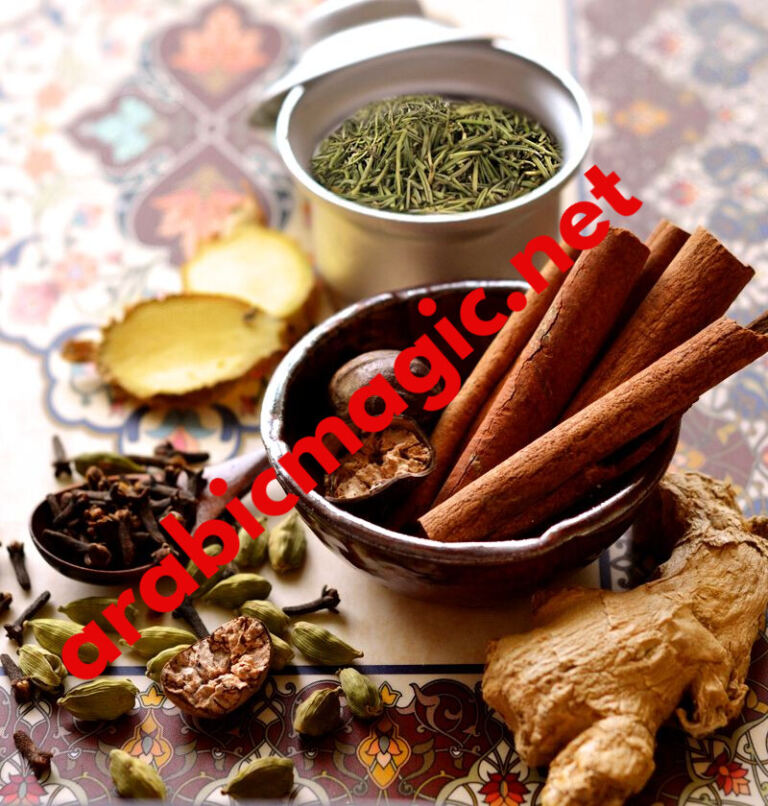
No serious ceremony of jinn invocation can occur without the burning of certain incenses from the Muslim magical pharmacopoeia, of which the most common are frankincense, oud (aloeswood), musk, amber along with other perfumes of vegetable or animal origin. After a period of intense recitation of the incantations and extensive burning of incense, the jinni will appear in the smoke. The sorcerer should remain strong and without fear. Requests or orders can now be delivered to the summoned being. When the jinni arrives, it is necessary to make a contract (aʾahd) with it. This can also refer to a personal seal or name that the jinnī will grant in exchange for certain conditions being met. At the conclusion of the operation a license to depart is given and the jinni is sent away in peace.
This article and all information published on this site are copyrighted. Any form of copying the texts or parts of them is prohibited. This site and all the information in it are protected by Digital Millennium Copyright Act. Any violation of this rights will be automatically detected and we will contact for assistance and legal action to your online provider and domain name registrar.
Don’t copy, be creative!