Karabasan – The Nocturnal Jinn That Causes Paralysis

“Suddenly I opened my eyes and felt an incredible weight press against my chest. I tried to move but to no avail. I couldn’t even draw a breath. And then I saw the creature sitting above me… I had never seen anything so ugly. I tried to scream, but no moan came out of my mouth. I began to pray in my mind to God and in a moment everything was gone.”

If this experience sounds familiar to you, you are most likely one of the many who have experienced a similar phenomenon. Modern medicine defines it with the term sleep paralysis – an awake state of consciousness or sleep disturbance, which can be due to fatigue, experienced stress, irregular sleep, or the presence of psychological disorders.
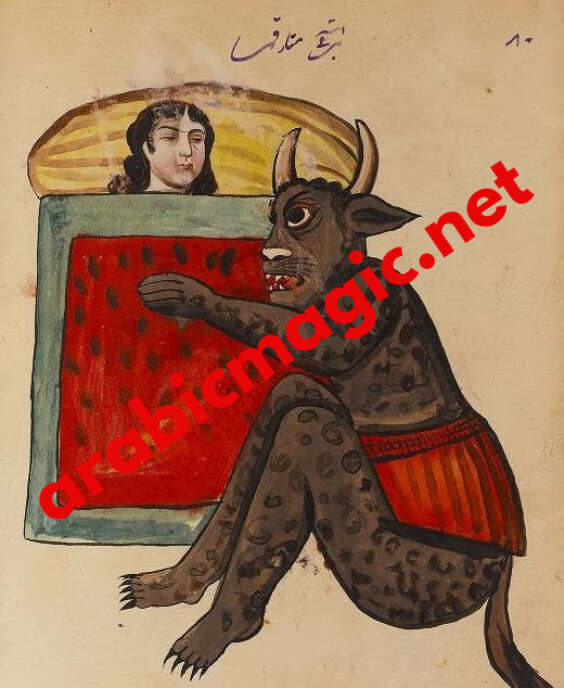
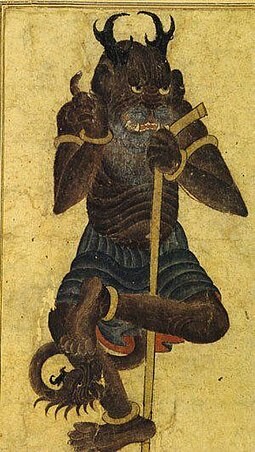
Karabasan Jinn - Karabasan – The Nocturnal Jinn That Causes Paralysis

Undoubtedly, under the influence of such factors, one can face this phenomenon. Folk tradition and belief, however, give an entirely different explanation for its nature, associating it with an attack by demonic creatures. It is precisely this perception that I will address here, referring to the legends and numerous accounts of unexplained nocturnal visitors.

In the folklore of different peoples, the spirits that attack sleeping people are called different names. In Russia – kikimora, In Croatia – moritsa, In Japan – kanashibari, and in England – The Old Witch. In Turkish and Middle Eastern folklore, they are defined as harmful jinn, mostly known as karabasan and kabus (nightmare), and in Egypt and Morocco called al-jathoom (night visitor) and boratat (the one who presses you).

The most famous is the karabasan – literally black pressure, which is an evil spirit or jinn that hovers over a person while he sleeps, causing him nightmares, and feeding on his fears. It is believed that these creatures can also be deadly, and some people dying in their sleep are said to have fallen victim to their wrath. The verb karabasmak is used for dreaming nightmares that cause disease states, and in Mongolian harakh/karah and the word khargah share a root meaning curse.

Turkish folklore mentions the karabasta or karabasu, which also translates as black squeeze, and is described as a creepy-looking creature that causes terrible visions. This name also refers to dreams that appear to be realistic and is used as a phrase for seeing a ghost. Sometimes it is also associated as a cause of death of women in childbirth. In the Azerbaijani language, a synonym for ghost is karabasma.

Similar in etymology is kamos and karakura. In the regions around Harput (Elyazug) kamos or kapos is called malevolent spirit that causes nightmares. It attacks those who sleep alone, pressing them with all its weight on their chests, and thus paralyzes them and can even kill them. According to various legends, the creature appears as a large monster or resembles a dwarf that roams at night and always wears a hat on its head. It is believed that if the hat is stolen from him, it will turn into gold in an instant. Some claims describe a kamos incarnated as a black cat that dries up the veins of its victims by drinking their blood.

Anatolian folk tradition defines caboose (kabus) as a jinn that has no definite form and frightens people in their dreams by sending them terrible nightmares and fears. It moves silently like a cat and can abduct the sleeping, and those attacked cannot breathe while under its grip. It is afraid of daylight and at sunrise, it cannot move. According to some assumptions, its origin is associated with a strangling spirit from the mythology of Moab and Assyria.

In local Turkish beliefs, karakura is the name of a disembodied evil spirit that is quiet and silent and attacks the lungs of women in labor. It also scares naughty children. In the regions of Erzurum and Erzincan, it is believed to steal the lungs of its victims by sending them terrifying nightmares and suffocating them. It is said in Konya that this creature looks like a goat, but is as light as a cat and suffocates the sleeper by sitting on his chest. However, when sunrise comes, karakura cannot move. Then it can be captured and become a servant of his master. It is believed that it visits beds where there are crumbs scattered around, so eating bread near the bedding should be avoided by people. The same interpretation is also found in the Sivas region, but there karakura is called by the name elkishave.

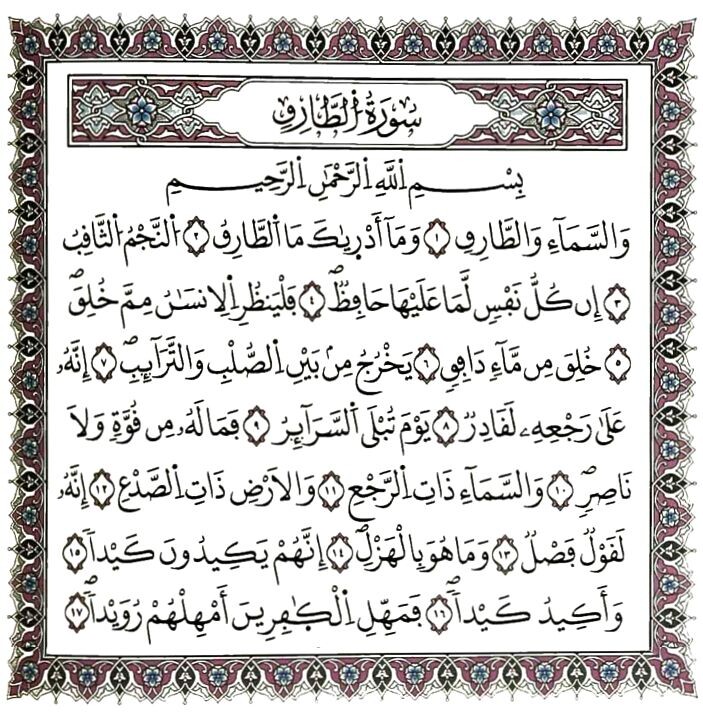
There are various beliefs and ways to protect against the attacks of night visitors in the form of specific prayers, amulets or protective actions. To ensure a restful and safe night, recite Ayat Al-Kursi 7 times before going to sleep. Another known method involves sprinkling water and vinegar in rooms and around beds, or placing a large iron object under the bed to prevent the evil spirit from passing through. An interesting belief states that people who often suffer from such attacks should keep a large needle under their pillow. When the uninvited guest looms in the night, if the attacked manages to muster up the strength and grab the needle by sticking it into the creature, it will jump to the ground and begin to frighten him, turning into various scary shapes, but it will not be able to escape. As the morning comes, it will assume the form of a dwarf and be under the person’s control.©

This article and all information published on this site are copyrighted. Any form of copying the texts or parts of them is prohibited. This site and all the information in it are protected by Digital Millennium Copyright Act. Any violation of this rights will be automatically detected and we will contact for assistance and legal action to your online provider and domain name registrar.

Don’t copy, be creative!
Related

  • Rue – An Herb For Attracting Good Luck & Prosperity

    Rue – An Herb For Attracting Good Luck & Prosperity

    Rue (Ruta graveolens) is one of the most well-known herbs in the folk medicine and magical tradition among the Balkan Muslims. Its use is multifaceted, mainly used to purify the home space and the human body from negative forces. Rue is a plant of Mediterranean origin, growing in places with a dry climate. Because of its specific smell, the herb is also used as an insect repellant, and traditionally at least one sprig is kept in the wardrobe next to the clothes. The rue was known for its protective qualities among the Greeks and Romans, being used to ward off evil forces and treat various health problems. The remnants of these ancient beliefs are preserved in folk medicine, where, for example, it is claimed that the herb successfully cures all heart diseases. Even Shakespeare himself gave the rue the unusual name “god’s mercy” because of the ritual practice of soaking a sprig of it in water and sprinkling it on possessed people. In some Mediterranean cultures, the plant is widely used in cooking because of its rich vitamin C content. Herb against diseases & evils: In addition to its many medicinal uses, the herb occupies a prominent place in folk beliefs and as a means of combating evil forces, mainly because of its smell, as well as the unusual appearance of its leaves, which resemble an outstretched human palm. This was reason enough for it to gain fame as a plant that protects against evil. Traditionally rue is cultivated in homes, near the front door, because of the belief that in this way it will protect the home and its inhabitants from evil eyes, magic and harmful spirits. Young children wear leaves of the herb or leaves are put under...
  • Ancient Arabic Magic & Oriental Occultism

    Ancient Arabic Magic & Oriental Occultism

    The Arabic magic is a mysterious occult science with a complex history. Coming from the exotic lands of the Orient and described in the tales of 1001 Nights, it remains shrouded in secrecy to present days. Although it is closely related to Islam and its mystical branches, its roots can be traced to the pagan beliefs of the ancient Mesopotamian civilizations. Subsequently developed and practiced by the Chaldeans, Sabean, and Nabataeans, who were called “stars worshipers” and were considered the wisest of their time. Pre-Islamic beliefs paid homage to many deities who were closely related to the seven celestial bodies. With the advent of Islam, some of these beliefs were lost or destroyed, and others were incorporated and absorbed by various early Islamic religious and spiritual cults. The great development of these occult teachings took place in the Middle Ages with the flourishing of Islamic culture, when remarkable and famous philosophers, scholars, and sages, including Al-Buni, Ibn Arabi, Al-Biruni, and Al-Ghazali, wrote and transcribed in Arabic numerous magical treatises and works with esoteric knowledge, astronomy, astrology, philosophy, and a number of other sciences for their students and the future generations. Some of them were translated into Latin, and a small part of these teachings passed into the Western occultism. From the whole blend of magical beliefs, spiritual and religious-philosophical teaching later is formed a complex system of rites and magical practices which in the Middle Eastern world is called with the generic term Rouhaniya that means Spirituality, and this term is used to denominate the Arabic magic. Among the initiates, it is also called Simiya or Ilm al-Hikma “Knowledge of Wisdom”. Those who practice these teachings are called mukarribun or “seekers of Divine closeness.” In the occult Western traditions, this...
  • Arabic Magical Potion To Drive Away Misfortunes & Attract Good Luck

    Arabic Magical Potion To Drive Away Misfortunes & Attract Good Luck

    Mix 50 g of each of the following ingredients: This article and all information published on this site are copyrighted. Any form of copying the texts or parts of them is prohibited. This site and all the information in it are protected by Digital Millennium Copyright Act. Any violation of this rights will be automatically detected and we will contact for assistance and legal action to your online provider and domain name registrar. Don’t copy, be creative! Related: Moroccan Arabic Magic Against Bad Luck Rue – An Herb For Attracting Good Luck & Prosperity Magical Arabic Talisman For Prestige, Respect & Fulfillment of Desires
  • Arabic Planetary Talismans

    Arabic Planetary Talismans

    In the Arabic magical tradition, there are various talismans associated with the main seven heavenly bodies. Presented here are some of the most popular, for the manufacture of which it is necessary to be engraved on stone or metal corresponding to the given planet, and made in auspicious astrological time. Arabic Talisman of Jupiter Jupiter is the planet of luck, finances and expansion. It is associated with stability and growth. The talisman helps its owner to attract luck and prosperity in a personal aspect or work. It also helps to avoid bankruptcy. If placed in the workplace or shop it helps to attract customers and visitors. It protects the home from negative forces and promotes a good atmosphere in it. Properties:Protects against dangers on landGives success in gambling and bettingImproves financial conditionAssists with business and court casesEndows its owner with ambition, honesty, and virtueIncreases mental energyIt helps to attract good luck overall Arabic Talisman of Moon The Moon is that celestial body that exerts the greatest influence on all forms of life and is identified with the feminine. Its talisman is related to intuition and protects its owner from aggression and physical dangers. Also for protection from evil forces and their elimination. Properties: · Against nightmares and for peaceful sleep· Drives away negative forces and spirits· To strengthen intuition and gives insight into sleep· Protection from dangers on the water· Alleviation of physical pain· To attract harmony· To protect the health· Accelerates recovery processes after illnesses Arabic Talisman of Mercury Mercury is associated with mental activity and travel. Its talisman strengthens memory and the ability to memorize quickly, and bestows success in studies and everything related to science. The talisman is especially suitable for students or those who earn their...
  • Arabic Amulets With Precious Stones

    Arabic Amulets With Precious Stones

    An amulet is an object believed to be endowed with certain magical or protective qualities. Different stones were originally worn as amulets in Uruk as early as the fourth millennium BC. And they continue to be used today by Muslims. In the Islamic world, the wearing of semi-precious or precious stones engraved with Quranic prayers, names of God and calligraphic texts is widespread. It is believed that such a stone, which carries divine words, will protect its owner from all kinds of troubles and dangers or will endow him with certain benefits. Such amulet stones contain a wide variety of inscriptions, from religious texts, numbers, and astrological signs to magical symbols and characters, and intended to be carried in a pocket, wrapped in cloth, as pendants, mounted on rings or directly hung in homes for protection. Some are also used as seals or a personal sign. It is believed that the material from which they are made or the stone itself is particularly important since each is characterized by certain properties. Stones also have their place in traditional medicine, where they are attributed to certain healing properties related to a given disease or health condition. Folk healers advise that each stone, according to its purpose, be permanently worn on a metal ring. Here we will give you examples for the most popular stones and minerals and their magical and mystical properties. Agate – in the Arab world it is called aqeeq and is one of the most widely used stones for amulets. It is considered sacred because the Prophet Muhammad himself is believed to have worn an agate (in other versions of this narrative it is a Carnelian stone also called aqeeq) on a silver ring on his right hand....
  • Magical Arabic Talisman For Prestige, Respect & Fulfillment of Desires

    Magical Arabic Talisman For Prestige, Respect & Fulfillment of Desires

    Engrave this seal on a plate of gold or on a gold ring in the first hour of Sunday, when the Sun is in Aries and the Moon in Leo, and carry it with you.© This article and all information published on this site are copyrighted. Any form of copying the texts or parts of them is prohibited. This site and all the information in it are protected by Digital Millennium Copyright Act. Any violation of this rights will be automatically detected and we will contact for assistance and legal action to your online provider and domain name registrar. Don’t copy, be creative! Related: Arabic Magical Potion To Drive Away Misfortunes & Attract Good Luck Arabic White Magic Manuscript Islamic Talisman – Herz Dua Al-Kaf -Free PDF