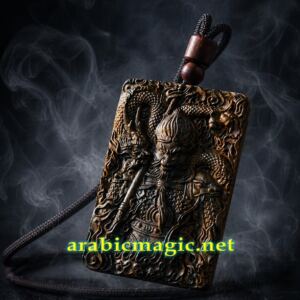



Zahira al-Nafis, The Jinn Queen of Flowing Fortune & Quiet Abundance
€320.00
Only 1 left in stock
Description
Her name was Zahira al-Nafis, though few who spoke it aloud truly understood what they were invoking. The old traders of desert crossroads whispered her name into the corners of their ledgers, and widows pressed it into their prayers when hope had thinned to a thread. Zahira was not worshipped in temples or carved into stone. She moved where intention gathered weight, where longing sharpened into belief. They said she was a queen among jinn not because she ruled with force, but because prosperity itself seemed to follow wherever her attention lingered. Wealth, in her presence, behaved less like chance and more like a current waiting to be stepped into.
Long before her name reached human tongues, Zahira had wandered the unseen layers of the world, studying the peculiar habits of desire. She noticed how humans often pushed abundance away even as they chased it. They clung too tightly to fear, mistook scarcity for safety, and doubted the very doors that opened for them. Zahira found this contradiction fascinating. Among her own kind, energy flowed freely; what one summoned, one received. But humans tangled their wishes with hesitation. So she began to listen more closely, to discern not what people said they wanted, but what they truly believed they deserved.
Her turning point came in a forgotten market town where dust covered everything except ambition. A young merchant there worked tirelessly yet earned almost nothing. Each night, he counted his coins with care, but always ended with a quiet certainty that there would never be enough. Zahira watched him for many days. She did not intervene at first. Instead, she followed the pattern of his thoughts. When opportunity approached him, he dismissed it. When someone offered partnership, he mistrusted it. It was not misfortune that kept him poor, but the quiet conviction that he must remain so. Zahira realized then that her role would not be to grant riches blindly, but to shift the unseen ground beneath a person’s belief.
When she finally chose to act, she did not place gold in the merchant’s hands. Instead, she placed a moment before him. A traveler arrived with goods to sell quickly, offering them at a fraction of their worth. Normally, the merchant would have hesitated, assuming risk. But Zahira bent the weight of his thoughts just slightly. Not enough to control him, only enough to loosen the knot of doubt. He took the chance. The profit he made was modest, but it disrupted his certainty. For the first time, he wondered if more was possible. Zahira understood that this small crack was where abundance could enter. From there, she guided him through a series of decisions, each one building on the last, until wealth no longer felt foreign to him.
Word of strange fortune began to spread, though no one could trace its source. People spoke of sudden clarity, of unlikely timing, of doors opening just when they chose to knock. Zahira did not favor kings or the powerful. In fact, she often avoided them. Those who already believed themselves entitled to wealth rarely changed in ways that interested her. She preferred those on the edge of transformation, where a single shift in perception could alter the course of a life. To a struggling farmer, she might bring the right rain at the right time, but only after planting the idea to try a different method. To a craftsman, she might draw the attention of a wealthy patron, but only after nudging him to refine his work with greater care.
Despite her growing influence, Zahira remained bound by a quiet rule she set for herself. She would never give what a person refused to hold. If someone rejected opportunity out of fear, she would not force it back upon them. If someone gained wealth but clung to scarcity in their thinking, she allowed it to slip away again. Her gifts required participation. This made her presence subtle, often mistaken for luck rather than intention. Yet those who experienced her influence deeply began to recognize a pattern. Their lives did not change overnight, but their relationship with possibility did. They became more willing to act, more open to receiving, and less anchored by the expectation of loss.
Over time, Zahira’s name gathered a quiet following among those who dealt in trade, growth, and creation. They did not build statues or offer sacrifices. Instead, they honored her by adjusting how they moved through the world. They took calculated risks. They invested in themselves. They allowed success to feel natural rather than accidental. Some claimed that simply remembering her name at moments of doubt helped them think more clearly. Others insisted she appeared in dreams, not as a figure, but as a presence that rearranged their understanding of what was possible. Whether these stories were literal or symbolic did not concern Zahira. What mattered was the shift they produced.
In the end, Zahira al-Nafis was less a giver of wealth and more a guardian of its flow. She did not create abundance from nothing. She revealed the paths where it already existed but went unnoticed. Her power lay in alignment, in bringing thought and opportunity into harmony. Those who encountered her influence often described a sense of ease, as if struggle had been replaced by direction. Not every story ended in great riches, but each one carried a thread of expansion, a movement toward something fuller. And so her legend continued, carried not in grand tales of miracles, but in quiet accounts of lives that changed the moment belief did.
The magical talismans and amulets that we offer are not commercial products but are entirely handmade charged with the correct Arabic rituals under strict control for performing all necessary requirements and favorable time for their creation. To order, please use the email below: [email protected]