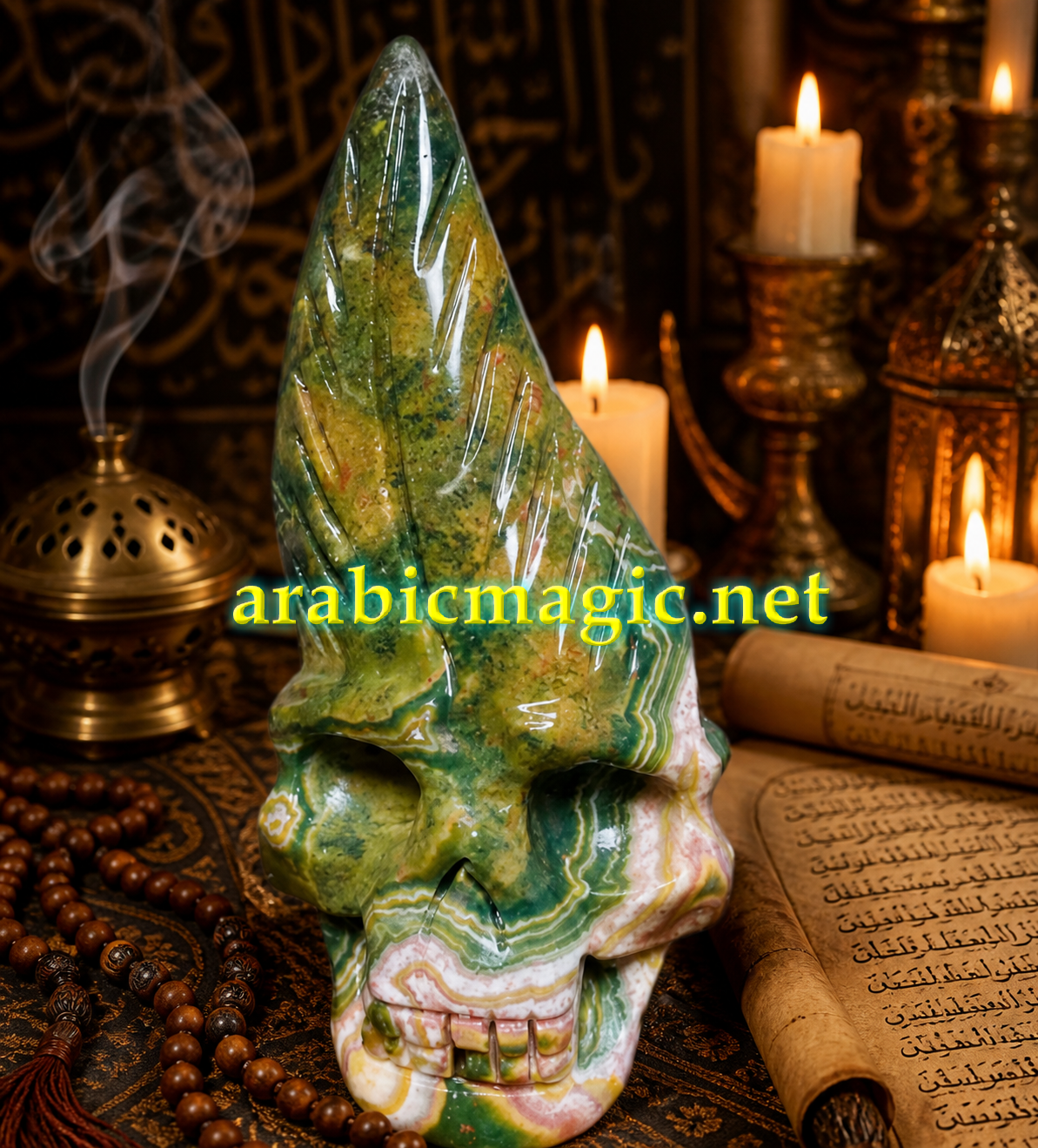
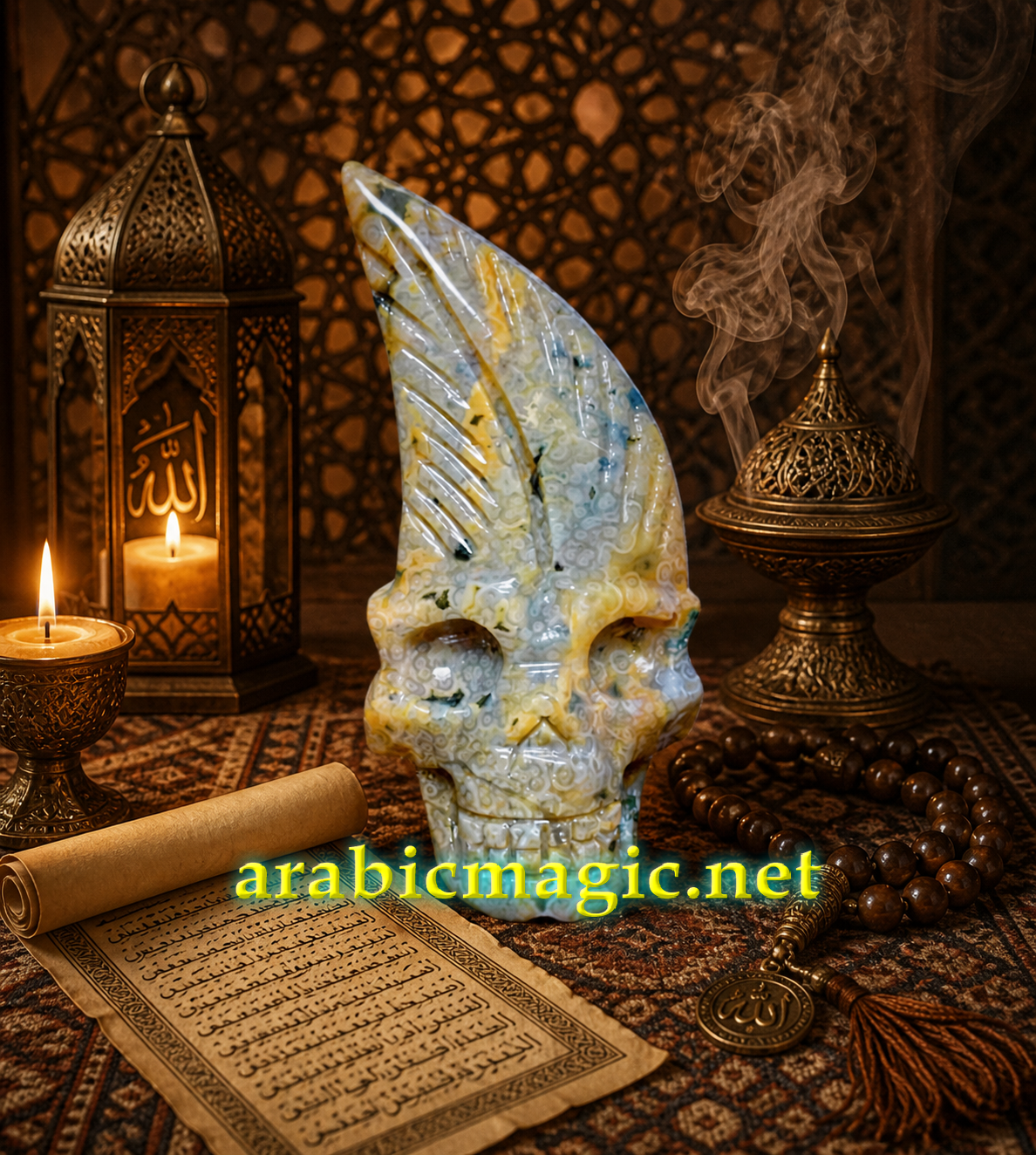
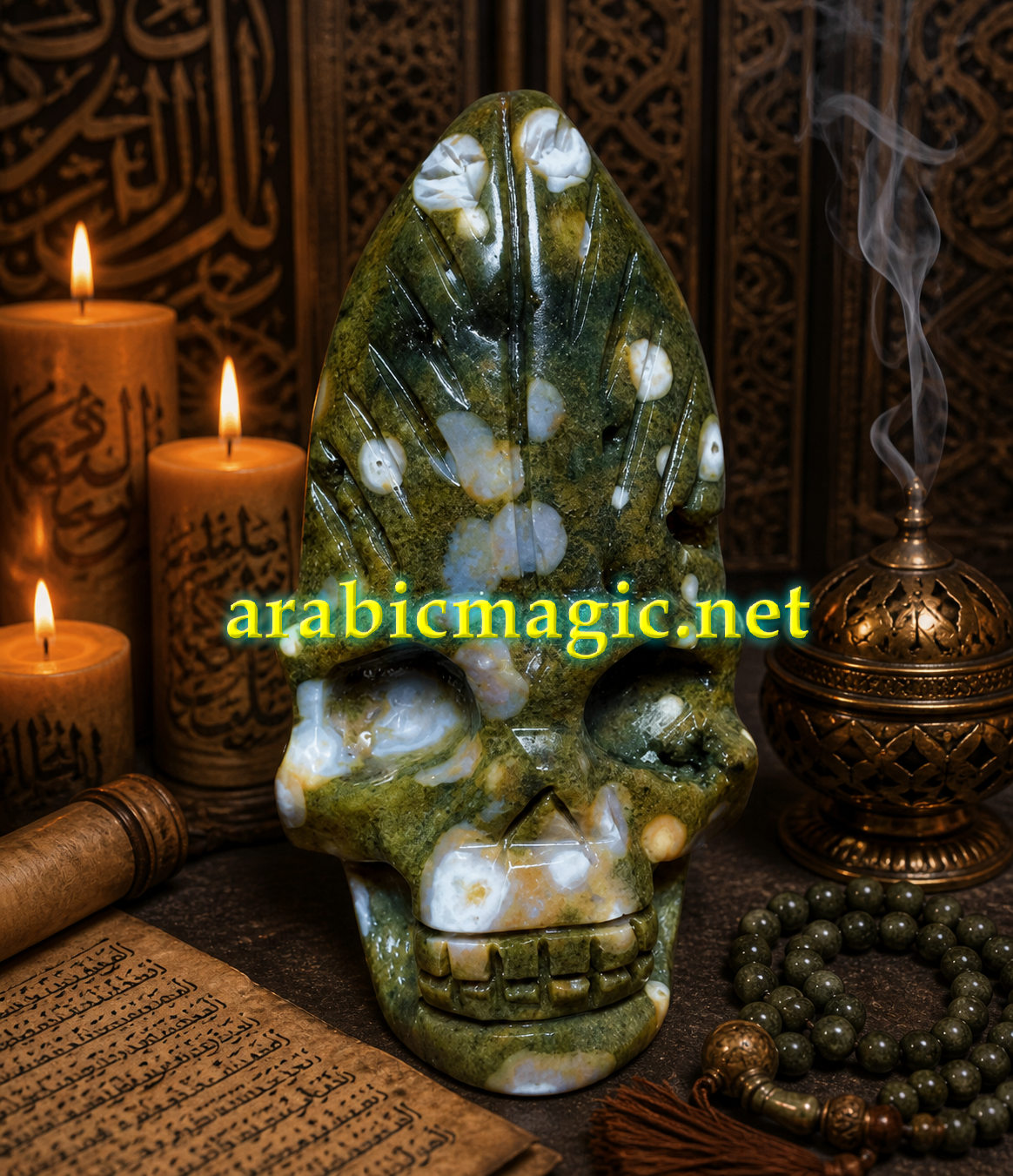
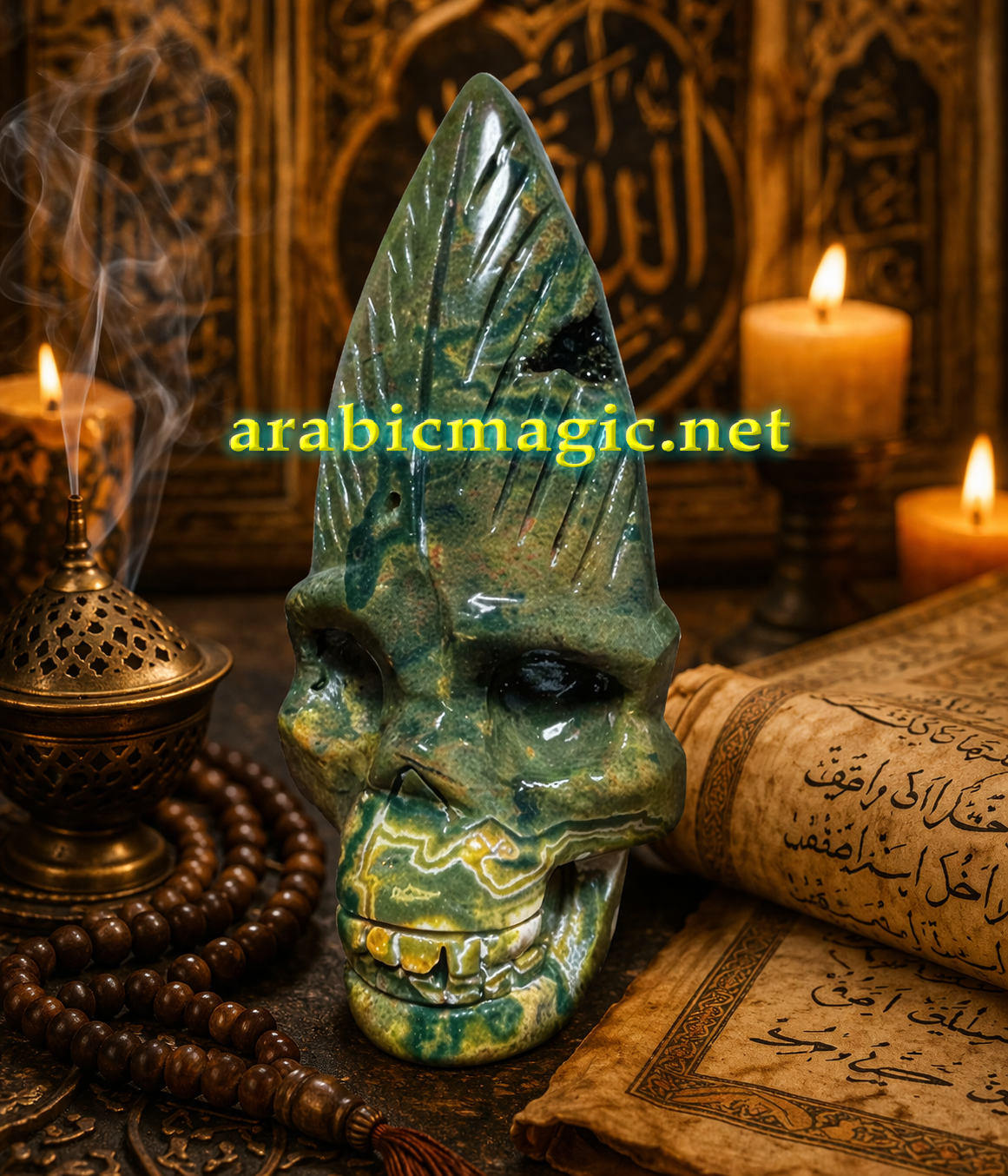
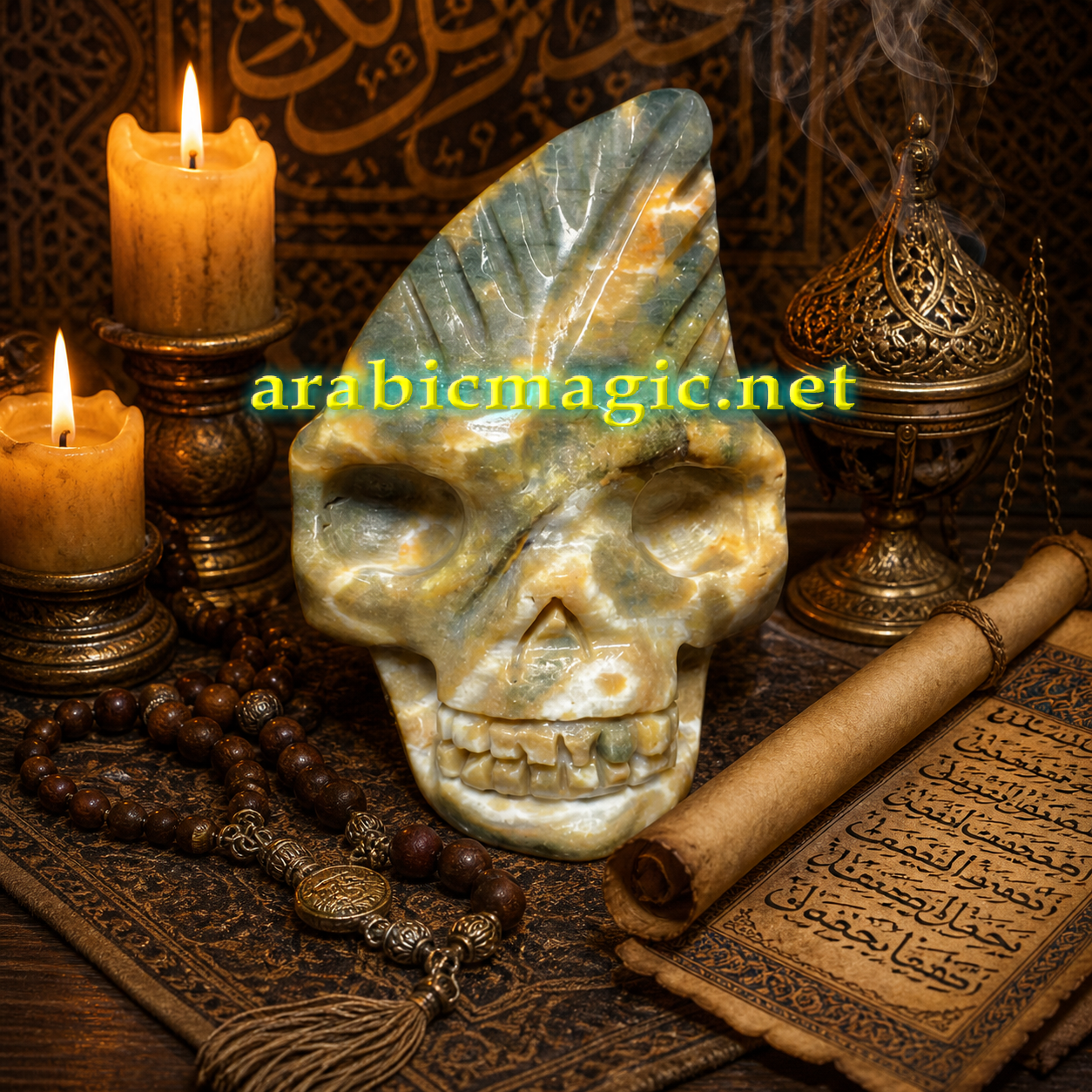
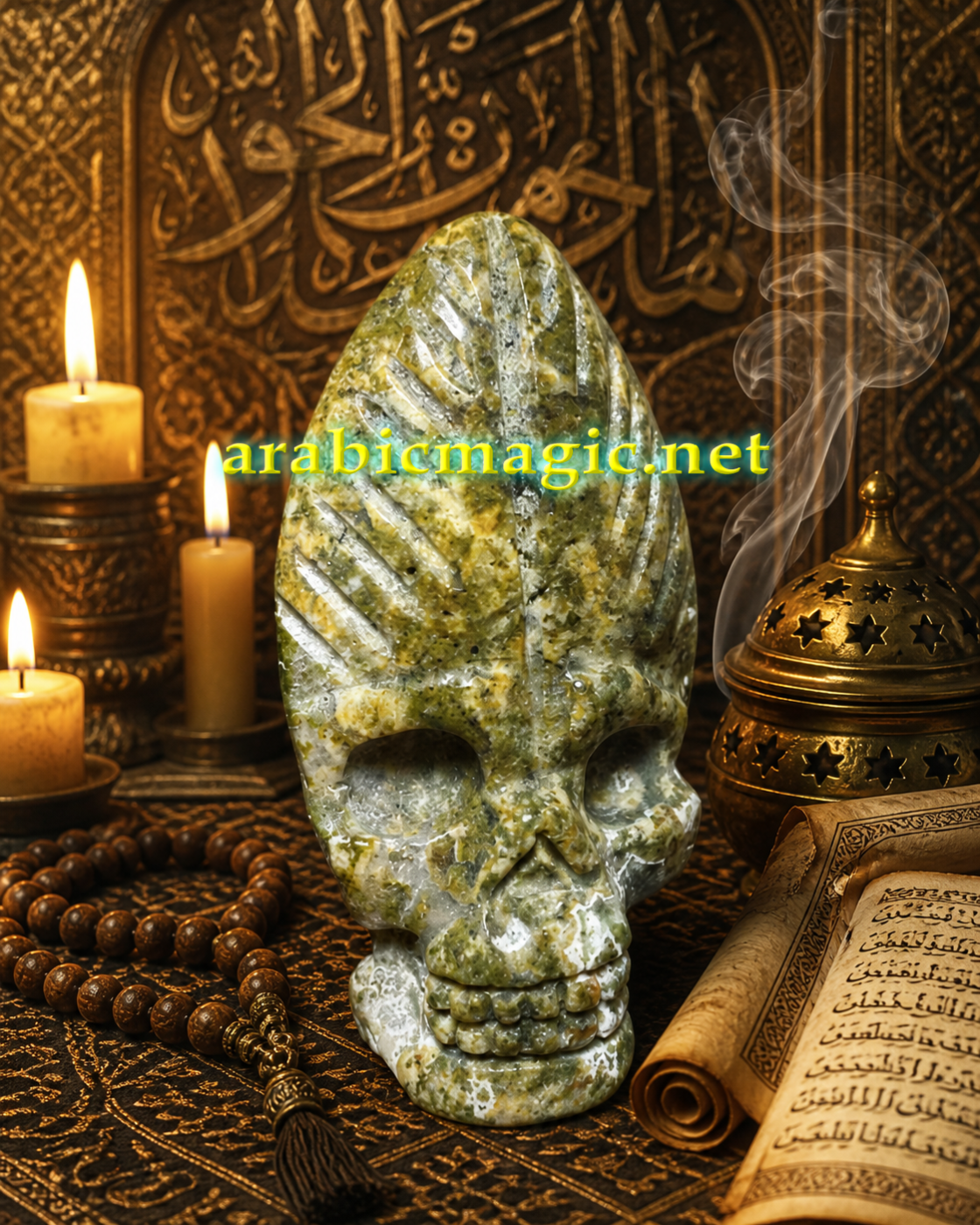
The Thirteen Sacred Skulls of Azravan al-Qadi, Immortal Jinn King of The Endless Forests, Longevity, Good Health, Unlimited Protection
€300.00
In stock
Description
Long before maps divided kingdoms and borders cut through ancient lands, the forests of the world were believed to belong to a hidden sovereign named Azravan al-Qadim, the King of the Endless Woods. His name was spoken in whispers from Morocco to Persia, and caravan travelers carried stories about him across deserts and mountain roads. Some claimed he was born from the first shadow cast by the cedar trees of Lebanon. Others believed he was one of the oldest jinn ever created, older than many dynasties and untouched by time. He was said to rule every forest path where sunlight failed to reach the ground, every forgotten grove where strange winds moved without reason, and every place where men felt watched though no living creature stood nearby. Azravan al-Qadim rarely interfered with human affairs, yet he despised cruelty toward nature and punished those who destroyed sacred woods without respect. Hunters who killed for pleasure vanished among the trees, while travelers who entered the forests with humility often emerged blessed with unusual fortune. In old Arabic manuscripts hidden inside private libraries, Azravan al-Qadim was described not as evil, but as immensely powerful and impossible to deceive. The stories claimed he commanded spirits of roots, storms, medicinal herbs, and hidden springs beneath the earth. His palace was believed to exist somewhere beneath a forest untouched by human hands, lit not by fire but by green flames that never burned out.
During the middle of the 18th century, the Ottoman world was filled with mystics, wandering scholars, astrologers, and occultists searching for forgotten knowledge. Among them was a secretive Sufi alchemist named Yusuf ibn Rahman, a man obsessed with extending human vitality and protecting the soul from corruption. Yusuf spent decades collecting fragments of ancient Arabic magical texts that mentioned Azravan al-Qadim and the rituals connected to him. According to legend, Yusuf finally discovered a hidden manuscript in Damascus written centuries earlier by a blind scholar who claimed to have spoken directly with the jinn king. The manuscript described a dangerous ceremonial pact that could bind sacred objects to Azravan al-Qadim’s power. Yusuf gathered twelve trusted disciples and disappeared into the forests near the Black Sea for forty nights. There, beneath enormous trees untouched by axes, they performed an ancient Arabic ritual known as Al-Ahd al-Akhdar, the Green Covenant. The ritual required incense made from rare herbs, water gathered before sunrise from seven springs, silver engraved with verses of protection, and complete silence from sunset until dawn. At the end of the fortieth night, thirteen magical skulls were created and consecrated beneath the stars. The legends insist that when the final prayer was spoken, the forest itself fell silent, as though every creature within it had stopped breathing. A wind moved through the trees in circles, and the disciples heard a deep voice promising protection and vitality to whoever carried the sacred objects with respect.
The thirteen skulls were never ordinary artifacts. Each one became spiritually connected to Azravan al-Qadim through invisible bonds maintained by the ancient covenant ritual. Their power was not based on domination or destruction, but on preservation, protection, and endurance. Owners of the skulls were said to enjoy unusually long and peaceful lives. Illness seemed to avoid them, accidents narrowly missed them, and enemies practicing black magic often found their curses returning upon themselves. In old accounts preserved by collectors and occult historians, merchants carrying the skulls survived shipwrecks while everyone around them drowned. Soldiers returned unharmed from impossible battles. Physicians who possessed one reportedly maintained clear minds and strong bodies far beyond old age. Several stories describe the skulls radiating a strange calmness that eased fear, sleeplessness, and despair. Azravan al-Qadim himself was believed to watch over every rightful keeper through the forests of the unseen world. Yet the pact carried strict conditions. The skulls could not remain long in places poisoned by greed, cruelty, or betrayal. If treated as mere objects for vanity or profit, their blessings faded. Some legends even warn that the forest king could withdraw his protection entirely, leaving arrogant owners vulnerable to sudden ruin.
As the decades passed, the thirteen skulls became scattered across empires and hidden among private circles of nobles, scholars, and mystics. One skull reportedly entered the treasury of an Ottoman governor in Cairo, where servants claimed the palace gardens bloomed even during years of drought. Another found its way into the hands of a Persian physician who became famous for living beyond one hundred years while retaining remarkable strength. In Venice, an aristocratic collector secretly displayed one during gatherings attended by occult philosophers and astronomers. Guests wrote in letters that the atmosphere of the room changed whenever the object was present, becoming unnaturally quiet and peaceful. During the Napoleonic campaigns in Egypt, French officers allegedly searched for one of the skulls after hearing rumors that local leaders used it for protection against assassination attempts. In the 19th century, European travelers carried several skulls into hidden collections across London, Vienna, and Saint Petersburg. Wealthy industrialists and royal advisers became fascinated with the legends of vitality and longevity surrounding them. Some owners treated the skulls as sacred companions, keeping them in private chambers where no sunlight entered after midnight. Others attempted to study them scientifically, though no analysis ever explained the unusual events associated with the artifacts.
Not all thirteen skulls remained accounted for. By the beginning of the 20th century, at least five had disappeared entirely, swallowed by war, theft, shipwrecks, revolutions, and unexplained vanishings. One skull was said to have been lost aboard a merchant vessel crossing the Mediterranean during a violent storm in 1907. Survivors later claimed the sea became unnaturally calm immediately after the artifact sank beneath the water. Another vanished during the Russian Revolution after belonging to a noble family connected to occult societies in Saint Petersburg. Rumors spread that the family attempted to hide the skull deep within a northern forest before soldiers reached their estate. A third disappeared from a private museum in Istanbul under impossible circumstances. Guards reported hearing distant sounds of wind moving through trees inside the building shortly before discovering the artifact missing. No doors or windows had been opened. Collectors around the world continue searching for the missing skulls, believing the complete set of thirteen would restore the full covenant with Azravan al-Qadim. Secret societies dedicated to ancient Arabic mysticism have spent fortunes following rumors, purchasing forgotten manuscripts, and investigating estates connected to former owners.
Modern stories surrounding the skulls remain equally mysterious. In recent decades, several wealthy collectors have quietly admitted possessing one, though very few allow outsiders to examine them directly. A Lebanese businessman reportedly survived three major accidents within ten years without serious injury after inheriting a skull from his grandfather. A woman from Argentina claimed the object in her family’s possession protected them during political unrest and financial collapse, preserving both their health and fortune while others suffered terribly. In Southeast Asia, an aging healer allegedly kept one hidden in a forest shrine where people traveled long distances seeking blessings for vitality and protection from curses. Those who spent a night near the shrine described vivid dreams involving endless woods illuminated by green fire. Some modern occult researchers believe the skulls function as spiritual anchors connecting the human world to Azravan al-Qadim’s ancient domain. They argue that the jinn king continues to guard those who honor the covenant established in the 18th century. Skeptics dismiss the stories as elaborate folklore created by collectors seeking to increase the value of rare artifacts, yet even skeptics admit the legends surrounding the skulls refuse to disappear.
The most frightening and fascinating part of the legend concerns the final prophecy attached to the thirteen skulls. According to hidden pages found within Arabic grimoires, Azravan al-Qadim warned Yusuf ibn Rahman that a day would come when humanity would forget its bond with nature entirely. Forests would burn for profit, rivers would become poisoned, and sacred places would be destroyed without remorse. During that age of imbalance, the skulls would begin calling to one another across the world. Owners would experience strange dreams of endless trees, distant drums, and green flames moving between branches. The prophecy claims that if all thirteen skulls are reunited during such a time, the ancient covenant will awaken fully once again. Azravan al-Qadim will open the hidden gates of his forest kingdom and restore forgotten knowledge connected to healing, vitality, and spiritual protection. Some versions of the prophecy describe this event as a blessing for humanity, while darker interpretations suggest the jinn king will judge mankind for centuries of destruction. Because of this, many collectors refuse to reveal the locations of the skulls they possess, fearing powerful organizations or fanatics may attempt to gather them together.
Today, the story of the thirteen magical skulls survives in fragments scattered across libraries, private collections, whispered conversations, and forbidden manuscripts. Scholars continue debating whether Azravan al-Qadim was ever a real entity or simply a symbolic figure representing the untamed force of nature itself. Yet the legends endure because too many strange coincidences surround the artifacts. Owners often live unusually long lives. Families connected to the skulls sometimes describe generations protected from disaster and sudden misfortune. Occult historians still search for records of Yusuf ibn Rahman and the twelve disciples who vanished into the forests during the creation ritual. Some believe descendants of those disciples continue guarding the surviving skulls in secret, waiting for the proper moment to reveal them again. Whether the stories are true or not, the legend of Azravan al-Qadim and the thirteen skulls continues to captivate collectors, mystics, and seekers of hidden knowledge across the world. Deep within ancient forests where sunlight barely reaches the earth, many still believe the jinn king walks unseen among the trees, watching silently over the sacred objects forever connected to his power.
The price is for one skull. You will receive a skull chosen by us that best reflects your essence. For this purpose, we will need your full name and date of birth. The dimensions of the skulls are approximately 5 centimeters.
The magical talismans and amulets that we offer are not commercial products but are entirely handmade charged with the correct Arabic rituals under strict control for performing all necessary requirements and favorable time for their creation. To order, please use the email below: [email protected]